

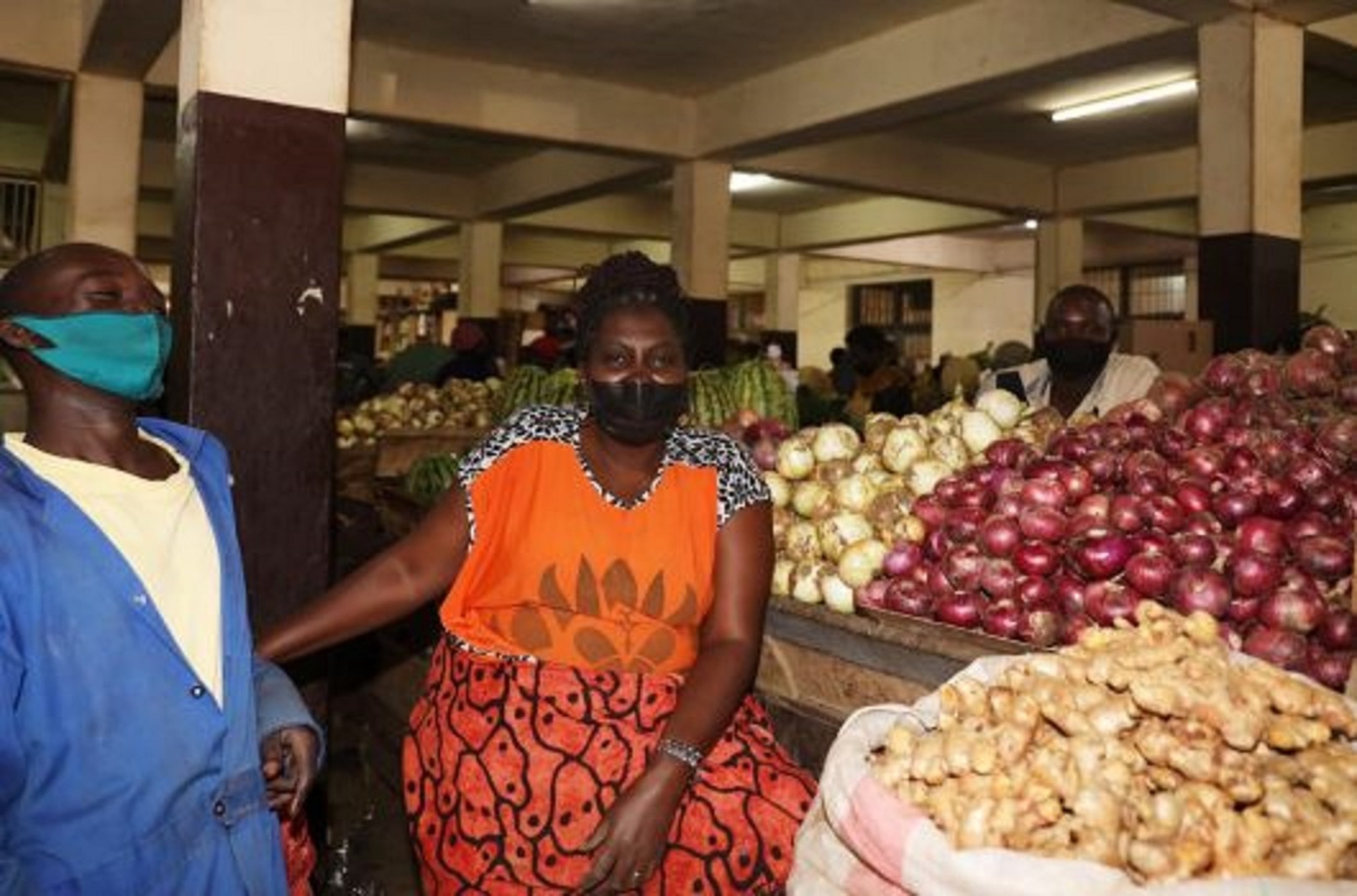
Through seed capital, business training and savings groups, Diane Bukebuke has transformed financial hardship into a growing fruit and vegetable business, providing greater stability for her family and a renewed sense of self-reliance.
For Diane Bukebuke, making ends meet once meant difficult choices. As a mother living in Kinyinya Sector, Gasabo District, she struggled to pay rent, support her children’s education, and meet her family’s basic needs.
Today, Diane runs a thriving fruit and vegetable business at Nyabugogo Market, and she credits the support she received through the UNHCR/Caritas Rwanda Graduation Pilot Project for helping her turn financial hardship into a more secure livelihood.
Through the project, Diane received US$500 in seed capital, which she invested in a small business selling fruits and vegetables. What started as an opportunity to earn an income has gradually become a source of stability for her family.
“Before the project, I was struggling financially. Paying rent and financing my children’s education was almost impossible. Now, through my business, my family can get what we need,” Diane says.
But for Diane, the transformation did not stop with the business grant. She also became part of a savings and credit group established among project beneficiaries. The group has become an important source of both financial support and encouragement.
By saving regularly with fellow beneficiaries, Diane can access small loans when she needs additional capital to invest in her business. This has enabled her to increase her stock and strengthen her income-generating activities.
“These groups help us in our development. As refugees, we were not allowed to borrow from financial institutions, but thanks to the savings groups we belong to, we can borrow money when needed,” she explains.
Beyond access to finance, Diane says the groups have created a sense of community among beneficiaries. Members visit one another, share experiences and support each other through challenges.
More than a business, a new sense of belonging
For fellow beneficiary Esperant King Ntakarutimana, the savings group has brought a different but equally important transformation.
Living in Bumbogo Sector, Gasabo District, Ntakarutimana says the group has given him people he can turn to for advice, encouragement and practical solutions when facing difficulties.
“With the group, I don't feel alone anymore. Through the experiences and testimonies of other members, I feel like I have found another family,” he says.
The impact of the Graduation Pilot Project is therefore reaching beyond income generation. For beneficiaries, the combination of skills training, seed capital and savings groups is helping them build businesses while developing the confidence, relationships and financial habits needed to become more self-reliant.
According to Marie Chantal Magnifique, a Caritas Rwanda project staff member, the project deliberately targeted some of the most vulnerable refugees and members of host communities.
“Some people we found in Kigali could no longer afford to pay their rent. After receiving training and investment support, they established income-generating activities. Today, some are involved in trade, while others are engaged in agriculture, livestock, handicrafts and transport. They are now able to address their personal needs,” she says.
She adds that the savings groups have become an important complement to the project’s seed capital, allowing beneficiaries to continue investing in and expanding the businesses they started.
Building a more secure future
The UNHCR/Caritas Rwanda Graduation Pilot Project seeks to improve the self-reliance and livelihoods of 836 refugees and members of host communities in Kiziba and Nyabiheke refugee camps and among urban refugees in Kigali.
The project provides integrated support, including financial literacy, income-generating agriculture and livestock activities, vocational training, market linkages and seed capital for implementing business plans.
In Kigali alone, the project supports 399 beneficiaries.
For Diane, the journey from financial uncertainty to running her own business shows what can happen when people are given not only capital, but also the knowledge, connections and financial tools to make that capital work.
Standing behind her stall at Nyabugogo Market, Diane is no longer simply trying to survive. She is investing, saving and planning for a more secure future for herself and her children.